
 PDF Download
 PubReader
 Export Citation
 Email the Author
 Share Facebook
 Share Twitter
 Cited by 0 Article
 Metrics (View:45)







1. Introduction
The English phonemic inventory contains a wide variety of fricatives with contrasts in voicing and place of articulation, such as /s/, /z/, /ʃ/, /ʒ/, /f/, /v/, /θ/, and /ð/ (Kim, 2008). In contrast, the phonetic inventory of Korean lacks various English fricatives, possessing only two alveolar fricatives: the plain /s/ ('ㅅ') and the tense /s*/ ('ㅆ'), and the voiced-voiceless contrast does not exist at the phonemic level (Kim, 2008; Lim & Seo, 2010). Second-language (L2) learners face immense challenges when acquiring target language sounds that do not exist in their first-language (L1) inventory, which directly leads to speech errors (Major, 1998; Seo & Lim, 2024). Due to differences between English and Korean phonological systems, Korean speakers learning English as a Foreign Language (EFL) often experience significant difficulties producing English fricatives, reflecting L1 transfer (Kim, 2008). Particularly when pronouncing /z/ and /f/, which are absent in Korean, learners exhibit a strong tendency to replace them with the most similar sounds or articulatory methods available in their L1 (Kim, 2008). According to previous studies, Korean learners tend to exhibit two contrasting substitution strategies: when producing the voiced alveolar fricative /z/, they insert a closure before the frication, resulting in affrication (e.g., /z/→[dʑ]); when producing the voiceless labiodental fricative /f/, they completely lose the frication and replace it with a stop, resulting in occlusion (e.g., /f/→[p]) (Seo & Lim, 2024).
Studies investigating these substitution errors and acoustic characteristics have contributed significantly to L2 phonology, but most previous research has methodological limitations by relying on small participant groups (fewer than 25 speakers) producing isolated words or nonce words in controlled laboratory settings (Lim & Seo, 2010; Seo & Lim, 2024). Such artificial speech environments may fail to fully reflect the articulatory features that occur in natural continuous speech. Furthermore, because previous studies typically either unified learners into a single proficiency group or dichotomized them into only two levels (e.g., low and high), they were limited in their ability to demonstrate the dynamic interlanguage system and track continuous developmental trajectories (Seo & Lim, 2024).
Therefore, the present study aims to overcome these limitations by utilizing a large-scale read-speech corpus established to analyze naturally occurring errors in continuous speech, thereby ensuring ecological validity. Specifically, this study utilizes the “Educational English speech data of Korean speakers” corpus provided by AI Hub, a government-funded database constructed for developing AI-based infrastructures. Based on the objective metadata of this corpus, learners are classified into three proficiency groups (LOW, MID, and HIGH), and native English speakers' data are used as a baseline to track the developmental trajectories of substitution errors as proficiency advances. Therefore, the present study explores how the dynamic interlanguage system and continuous developmental trajectories of the two fricatives differ across varying proficiency levels. The specific research questions are as follows:
2. Literature Review
Within interlanguage phonetics and phonology, learners constantly navigate the complex interplay between language-specific transfer factors and universal developmental factors (Major, 1998). Major (1998) emphasizes that this dynamic system is deeply rooted in a natural and crucial symbiosis between fine-grained phonetics and abstract phonology, arguing that speech perception processes are fundamentally critical to the formation of underlying interlanguage representations. A leading model that accounts for these perceptual processes is the Perceptual Assimilation Model (PAM), which posits that listeners do not merely process psychoacoustic cues but directly perceive the dynamic, distal articulatory gestures of a speaker (Best, 1995). L1 listeners who are naive to the target language perceptually assimilate non-native phones to their existing L1 categories based on their proximity and gestural similarity in the L1 phonological space (Best, 1995).
To account for L2 learners who are actively acquiring a target language rather than naive L1 listeners, Best & Tyler (2007) proposed the L2 extension of this framework (PAM-L2). A critical postulate of PAM-L2 is the hierarchical distinction between the phonological level (the lexical-functional level where contrastive categories signal semantic differences) and the phonetic level (sub-lexical gestural realizations and gradient phonetic details) (Best & Tyler, 2007). In this framework, L2 acquisition is a dynamic, experience-dependent process shaped by the learner’s language environment. As learners acquire L2 vocabulary, the expanding lexicon exerts a “forceful linguistic pressure” to “re-phonologize” target contrasts (Best & Tyler, 2007). Specifically, the adaptive significance of detecting a contrast—driven by high lexical frequency and communicative necessity—forces the learner to perceptually differentiate and restructure L1-influenced categories (Best & Tyler, 2007). Conversely, when exposure to target L2 sounds is extremely sparse, the lack of sufficient lexical pressure may lead to prolonged interlanguage fossilization or stagnant phonetic category restructuring (Best & Tyler, 2007).
3. Methods
This study utilized the large-scale corpus titled “Educational English speech data of Korean speakers (교육용 한국인의 영어 음성 데이터)” provided by AI Hub (https://aihub.or.kr/). The English portion of this comprehensive corpus consists of approximately 1,052 hours of speech data, collected from a diverse demographic of Korean EFL learners.
The following describes the demographic characteristics of the speakers whose data were included in the analysis. A total of 240 unique speakers participated in the present study, distributed across three proficiency groups: 84 in the LOW group (35.0%), 85 in the MID group (35.4%), and 71 in the HIGH group (29.6%). In terms of age distribution, speakers in their 20s comprised the largest proportion (39.6%), followed by those in their 10s (37.1%), 30s (17.1%), 40s (4.6%), and 50s (1.7%). Regarding gender, female speakers (n=170, 70.8%) outnumbered male speakers (n=70, 29.2%), reflecting the overall demographic composition of the corpus.
The /f/ target data were drawn from a total of 126 unique speakers: 46 in the LOW group, 43 in the MID group, and 37 in the HIGH group. The /z/ target data were drawn from a total of 136 unique speakers across three proficiency groups: 44 speakers in the LOW group, 47 in the MID group, and 45 in the HIGH group. It should be noted that individual speakers may have contributed multiple tokens within the same group, as sampling was conducted at the token level rather than the speaker level.
To ensure ecological validity while controlling individual fluency and spontaneous speech variations, only sentence-level read-speech data recorded in controlled environments (e.g., PC recordings) were selected for analysis. The proficiency levels of the Korean learners (Low, Mid, High) were directly adopted from the official metadata provided by the AI Hub corpus. Rather than relying on standardized test scores, the corpus established these proficiency groups through a highly rigorous, multi-rater evaluation system to ensure objectivity. Specifically, for pronunciation, two evaluators independently scored the speech on a 1-to-5 scale based on accuracy and prosodic fluency. If the score difference between the two raters was 2 points or more, a third senior evaluator (professor-level) intervened to adjust and finalize the score. Furthermore, for general speaking proficiency, three evaluators simultaneously scored the speech on a 1-to-9 scale, and the average score was used. In the overall corpus, the proficiency levels are distributed into LOW (51.02%), MID (34.25%), and HIGH (14.73%). This metadata also includes detailed diagnostic assessments, such as articulation and prosody scores, as well as phoneme-level error provided in JSON format, which served as the objective basis for the macroscopic error analysis.
In addition to the learner data, speech data from native English speakers, sourced from the online pronunciation dictionary Forvo, were utilized as a baseline for microscopic acoustic comparison.
The target phonemes for this study were the voiceless labiodental fricative /f/ and the voiced alveolar fricative /z/ in word-initial positions within primary stressed syllables. Target words were selected to represent diverse following vowel environments while considering phonetic comparability between the /f/ and /z/ conditions to the extent possible. Target words included high-frequency words such as food, fact, face, form, and fish for /f/, and zero, zone, zany, zoos, and zinc for /z/.
During the data extraction process, a stark contrast in corpus-internal frequency was observed between the two target fricatives. In the entire corpus, words starting with /f/ were highly abundant, comprising 517 unique word types and yielding a total of 102,122 tokens. Conversely, words starting with /z/ appeared significantly less frequently, with only 15 unique word types and 820 total tokens. To control for this extreme frequency disparity and ensure a balanced comparison, 50 tokens per proficiency group were randomly sampled for both /f/ and /z/. For /f/, this uniform sampling resulted in a total of 150 tokens. For /z/, out of the 50 tokens randomly sampled from the LOW proficiency group, two tokens were excluded from the analysis as they exhibited deletion errors rather than substitution errors. Consequently, a total of 148 tokens (LOW n=48, MID n=50, HIGH n=50) were finalized for the acoustic analysis of /z/. For /f/, the target words were evenly distributed within each proficiency group, with 10 tokens sampled per word type out of the 50 tokens per group. For /z/, however, the number of tokens sampled per word type was not evenly distributed due to the difference in the actual number of available tokens during the random sampling process. In particular, zone accounted for approximately 48% of the entire /z/ sample (71 out of 148), constituting a disproportionately larger share compared to the other target words.
The analysis was conducted in two stages: a macroscopic examination of substitution error rates and a microscopic acoustic analysis. In the first stage, the overall substitution error rates for /f/ and /z/ were calculated based on a two-step validation process. First, we utilized the official sentence-level error tagging provided by the AI Hub corpus metadata, which explicitly categorizes productions into correct (C), deletion (D), insertion (I), substitution (S), and other (O). Second, to ensure maximum phonetic accuracy and internal consistency, a single researcher manually cross-validated these tags. Specifically, tokens tagged with 'S' were classified as substitution errors, while those tagged with 'C' were counted as target-like productions.
In the second stage, the tokens identified with substitution errors were extracted and subjected to acoustic analysis using Praat. The acoustic analysis in this study was designed to focus on distinct sets of phonetic parameters tailored to each error type. The acoustic cues primarily used to identify the physical articulatory characteristics of English fricatives include frication duration, rise time, and aspiration (Kim, 2008). In particular, fricatives are characterized by continuous aperiodic noise energy throughout the articulation process, whereas affricates exhibit frication noise only partially due to the presence of a preceding closure duration. When an L2 learner substitutes a fricative with an affricate or a stop, the frication ratio significantly decreases compared to that of a native speaker (Seo & Lim, 2024). For /z/ affrication errors, the frication ratio—defined as the proportion of frication noise duration relative to the total consonant-vowel (CV) duration of the word-initial /z/ and the immediately following vowel (=/z/ noise over /zV/ duration)—was adopted as the primary acoustic cue to quantify the degree of affrication. This relative measure was employed to control for individual variation in speech rate along with the difference in duration of each target word, and a lower frication ratio indicates a higher degree of L1-influenced affrication (Seo & Lim, 2024). For /f/ stopping errors, however, frication is entirely absent in the substituted production, rendering the frication ratio uninformative. Instead, closure duration and voice onset time (VOT) were measured to verify the stop-like realization of the target fricative. It should be noted that the use of distinct acoustic cues for each phoneme precludes a direct cross-phoneme acoustic comparison; the developmental trajectories of /z/ and /f/ are therefore treated as independent analyses.
Frication ratio data were analyzed using a linear mixed-effects model with the lme4 package in R, with proficiency group as a fixed effect and target word as a random intercept to account for word-level variability. Substitution error rates were examined using logistic regression with proficiency group as the predictor, followed by pairwise Fisher's exact tests for post-hoc comparisons.
4. Results
Table 1 presents the overall substitution error rates for the target fricatives /f/ and /z/ across the three proficiency groups. As shown in the table, the substitution error patterns between the voiceless labiodental fricative /f/ and the voiced alveolar fricative /z/ exhibited a stark asymmetry. For /f/, the substitution errors, especially in occlusion, were extremely rare across all proficiency levels, with error rates of 6.00%, 6.00%, and 2.00% for the LOW, MID, and HIGH groups, respectively. A Fisher's exact test indicated that differences in the /f/ error rates among the proficiency groups were not significant (n.s.) (LOW vs. MID, p=1.000; LOW vs. HIGH, p=.617; MID vs. HIGH, p=.617). A logistic regression similarly yielded no significant group differences (all p>.05), corroborating Fisher's exact test results.
Conversely, the rates of substitution error, which is affrication, for /z/ were substantially higher but demonstrated a clear decrease as learner proficiency increased. The LOW group exhibited the highest error rate at 68.75%, which dropped to 42.00% in the MID group and further to 30.00% in the HIGH group. A Chi-square test revealed a statistically significant difference in the /z/ error rates among the groups [χ²(2)=15.42, p=.0004]. Pairwise comparisons indicated that the LOW group was significantly different from both the MID group (p=.009) and the HIGH group (p=.0002). However, the difference between the MID and HIGH groups did not reach statistical significance (p=.298). The results of a logistic regression were consistent with the chi-square analysis, confirming that MID (β=−1.11, OR=0.33, p=.009) and HIGH (β=−1.64, OR=0.20, p<.001) groups showed significantly lower error rates than the LOW group.
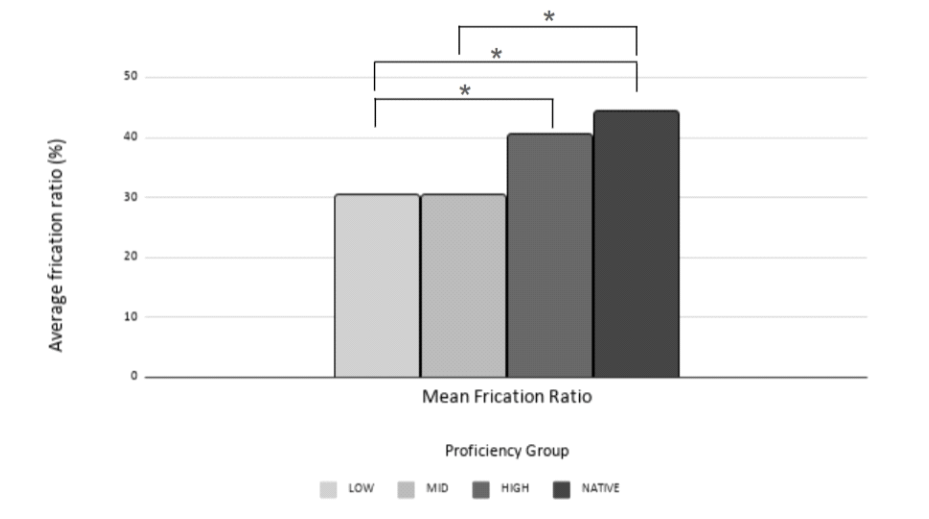
To quantify the degree of L1-influenced affrication for /z/ at the microscopic acoustic level, the frication ratio was measured. Table 2 presents the overall mean values of frication noise duration, duration of the following vowel, and frication ratio for each group. Figure 1 illustrates the mean frication ratio of /z/ produced by the Korean EFL learners and the native English baseline. Additionally, the detailed raw data for each vowel context is provided in the Appendix.
A linear mixed-effects model with word as a random intercept revealed significantly lower frication ratios in the LOW (β=−11.41, SE=2.77, t=−4.11, p<.001) and MID (β=−10.90, SE=2.96, t=−3.68, p<.001) groups relative to the native baseline. The LOW and MID groups showed similarly low frication ratios (30.35% and 30.42%, respectively), indicating a persistently high degree of affrication with no meaningful improvement between the two groups. Notably, the HIGH group showed a marked increase in mean frication ratio to 40.37%. Critically, the HIGH group did not differ significantly from the native English speakers (β=−5.33, SE=3.44, t=−1.55, p=.124), indicating convergence toward the native norm at the advanced proficiency level.
5. Discussion
The results revealed a clear dissociation between error rate and acoustic realization in the developmental trajectory of /z/ affrication: whereas substitution error rates decreased linearly across proficiency levels, frication ratios remained acoustically stagnant from LOW to MID before converging with native norms at the HIGH level. This threshold-like pattern, alongside the stark asymmetry between /f/ and /z/, warrants further discussion. Because the Korean phonemic inventory lacks the target fricative /z/, learners often resort to L1 transfer by inserting a stop closure before the frication noise, which results in affrication (Kim, 2008; Seo & Lim, 2024). This L1-influenced strategy was evidently observed in the present study, as the LOW and MID proficiency groups exhibited severe affrication with significantly lower frication ratios (30.35% and 30.42%, respectively) compared to the native baseline. However, as the learners' overall proficiency advanced to the HIGH level, a significant acoustic development was observed. The HIGH group's mean frication ratio increased to 40.37%, and more importantly, it became statistically indistinguishable from that of native English speakers (44.42%). This finding provides robust evidence that the advanced L2 learners are capable of overcoming L1 interference, successfully restructuring their interlanguage phonological system, and accurately realizing the continuous frication required for the target English sound.
While /z/ affrication remained highly frequent until the advanced stage, the voiceless labiodental fricative /f/ exhibited an entirely different developmental pattern. The substitution error for /f/ (i.e., occlusion) was extremely rare across all proficiency levels, remaining at or below 6% even in the LOW group. This stark asymmetry between /f/ and /z/ cannot be fully explained by the L1 phonological system alone, given that both fricatives are absent in Korean and are expected to pose significant articulatory difficulties for learners (Kim, 2008). The current study posits that this asymmetric acquisition pattern is closely related to the substantial difference in the corpus-internal frequency of the target sounds. Previous studies in L2 phonology have emphasized that word frequency is a crucial factor affecting L2 speech accuracy, as words with higher input frequencies are more easily retrieved and articulated accurately through continuous exposure (Seo & Lim, 2023). During the data extraction process of this study, an overwhelming frequency disparity was discovered within the corpus as previously mentioned in section 3.2. Furthermore, we also compared the target words using the Zipf frequency scale, a standardized logarithmic measure of lexical frequency ranging from 1 to 7. Values of approximately 1 represent very low-frequency words, whereas values of 6–7 represent very high-frequency words (van Heuven et al., 2014). Table 3 presents the Zipf frequency values of the target words. The target words beginning with /f/ exhibited substantially higher lexical frequency than those beginning with /z/ (mean Zipf frequency=5.29 vs. 3.76, respectively).
This frequency disparity likely played a decisive role in the asymmetric developmental trajectories observed in the present study. This empirical asymmetry can be theoretically explained by the lexical pressure hypothesis within the PAM-L2 model (Best & Tyler, 2007). Because Korean EFL learners are exposed to significantly more /f/-initial words in their L2 input, they could rapidly suppress the L1-transferred occlusion error even at the beginner level, with the high adaptive significance and communicative necessity of distinguishing /f/ from the native stop category [p]. This intense lexical pressure allows even beginner-level (LOW) learners to rapidly suppress L1-transferred occlusion errors (Major, 1998). Conversely, the extremely limited exposure to /z/-initial words fails to provide sufficient lexical pressure or communicative urgency (Best & Tyler, 2007). This restricted opportunities to practice continuous frication due to input deficiency cause prolonged affrication errors that were only resolved at the advanced proficiency level. Therefore, the present findings suggest that the development of L2 fricatives is driven by a complex interplay between inherent articulatory difficulty and the frequency of lexical exposure in the target language environment.
| Table 3. Zipf frequency of the target words | |||
|---|---|---|---|
| Word | Zipf | Word | Zipf |
| food | 5.40 | zero | 4.63 |
| fact | 5.41 | zone | 4.72 |
| face | 5.45 | zany | 2.67 |
| form | 5.31 | zoos | 3.13 |
| fish | 4.90 | zinc | 3.65 |
6. Limitations and Suggestions for Future Work
While the present study successfully tracked the linear developmental trajectories of English fricatives using a corpus, it has several limitations.
First, although the study randomly sampled 50 tokens for both /f/ and /z/ to ensure a balanced statistical comparison, the corpus-internal frequency of the two target sounds was overwhelmingly disproportionate. Previous studies in L2 phonology emphasize that word frequency is a crucial factor affecting L2 speech accuracy, as words with higher input frequencies are more easily retrieved and articulated accurately (Seo & Lim, 2023). Therefore, it is highly probable that this massive gap in lexical exposure frequency played a decisive role in the asymmetric acquisition patterns between /f/ and /z/, as learners had significantly more opportunities to practice /f/-initial words in the target language environment.
Second, the inherent articulatory and acoustic differences caused by the voicing contrast were not fully isolated. Unlike the diverse fricative inventory of English, the Korean phonological system completely lacks voiced fricatives, making sounds like /z/ intrinsically more challenging for Korean learners to produce than voiceless fricatives (Kim, 2008). To disentangle the effects of target language input frequency from the inherent acoustic effects of voicing, future research should expand the target phonemes to include the voiceless alveolar fricative /s/ and the voiced labiodental fricative /v/. By incorporating these additional phonemes, researchers can construct a balanced 2×2 matrix crossing the place of articulation with voicing, while strictly controlling for the target phoneme's lexical frequency.
Third, the phonetic environments of the target words were not strictly controlled regarding the following vowels. The target stimuli included a mixture of monophthongs (e.g., fish, zinc, fact) and diphthongs (e.g., face, zone, zany). Although target sound with primary stress were consistent in every target, as inherent vowel length and quality can induce coarticulatory effects and influence the temporal characteristics of the preceding onset consonants, these uncontrolled vowel contexts might have introduced unintended acoustic variations in the measurement of frication ratios. Furthermore, because the number of available corpus tokens differed considerably across target word types, particularly for the /z/ stimuli, the data were not suitable for a reliable analysis of consonant production as a function of the following vowel environment. Future studies should collect balanced tokens of highly controlled stimuli, such as minimal pairs with identical following vowels, to ensure a more precise acoustic comparison.


